Microcement & Seamless Surface Specialist · New Orleans, LA
Microcement, tadelakt, and mineral plaster — built for New Orleans humidity, where grout goes black and mold finds every seam.
Personally installed by Ryan Mena · NOLA, Metairie & Westbank.
Upload a photo — see it in microcement in ~60 seconds. Free. Or explore finishes ↓
Featured Work
Three types of rooms.
One seamless philosophy.
Why Seamless
Built for NOLA humidity —
not generic "wet areas."
No grout, no mold habitat
Grout is porous cement. It absorbs. It holds moisture. That's where mold lives. Seamless surfaces have none.
No joints, no place to sneak behind
Every seam is a chance for water to work its way through. My installs have zero — one continuous surface, wall to floor to niche.
Waterproof for New Orleans, specifically
Not a generic wet-area system. Every material I use is chosen for 76% humidity, foundation shift, and how NOLA houses actually sweat.
What does this actually cost?
Drag the slider, pick a finish, see a real number — drawn from the same ranges Ryan uses on real jobs. No “call for pricing” runaround.
1. Pick a finish
2. How big is the project?
Your estimate
$1,450–$2,800
Honest range. Includes prep, materials, labor, and topcoat sealing. Final quote after Ryan walks the space.
What's included
- · Substrate prep + bonding primer
- · Material + premium pigment
- · 5–7 hand-applied layers
- · Topcoat sealing for a 10-year finish

Ryan Mena
Founder · Craftsman · NOLA-born
Meet Ryan
I used to install tile.
I stopped.
I'm Ryan, born and raised in New Orleans. I spent years installing tile in NOLA bathrooms — and watching that exact same tile fail inside a decade. It's not the tile's fault. It's just the wrong material for this climate.
So I went and learned the alternative. Microcement. Tadelakt. Marmorino. Sculpted rockscape. Surfaces that don't have seams to fail. Surfaces that look like a Tulum hotel or a Moroccan riad — and last in NOLA humidity for decades.
Now that's all I do. One craftsman. Real materials. Photos of every step. You text me, I show up, I treat your home like my own. That's the whole pitch.
“Grout turning black. Caulk peeling. Mold finding the smallest seam.”
Process
Three steps. That's it.
Share your space
Snap a photo of the room, wall, floor, or outdoor area you want to transform.
Align on finish and scope
See it redesigned in The Seamless Studio, then we lock finish, scope, and budget together.
I build it
One craftsman, one continuous surface. In and out — no subcontractors, no surprises.
For Contractors & Remodelers
You run the job. I install the seamless surface — microcement, tadelakt, venetian, rockscape. Bill more, same schedule.
Pricing
Three ways I build seamless.
Every seamless bathroom I install falls into one of three tiers. The Seamless Studio helps you (and me) figure out which one fits your space before I quote a fixed number.
Essential Seamless Bathroom Overlay
Single bathroom, existing footprint
Starting at $5,500
Most qualifying overlays range from $5,500–$9,500.
- Microcement or tadelakt over existing tile (when stable)
- One shower or tub surround
- Standard bathroom footprint
- Little or no demolition on qualifying projects
- 5-year bond warranty, 1-year seal warranty
Signature Grout-Free Bathroom Transformation
Full bathroom rebuild in seamless
Starting at $15,000
Most Signature transformations range from $18,000–$35,000+.
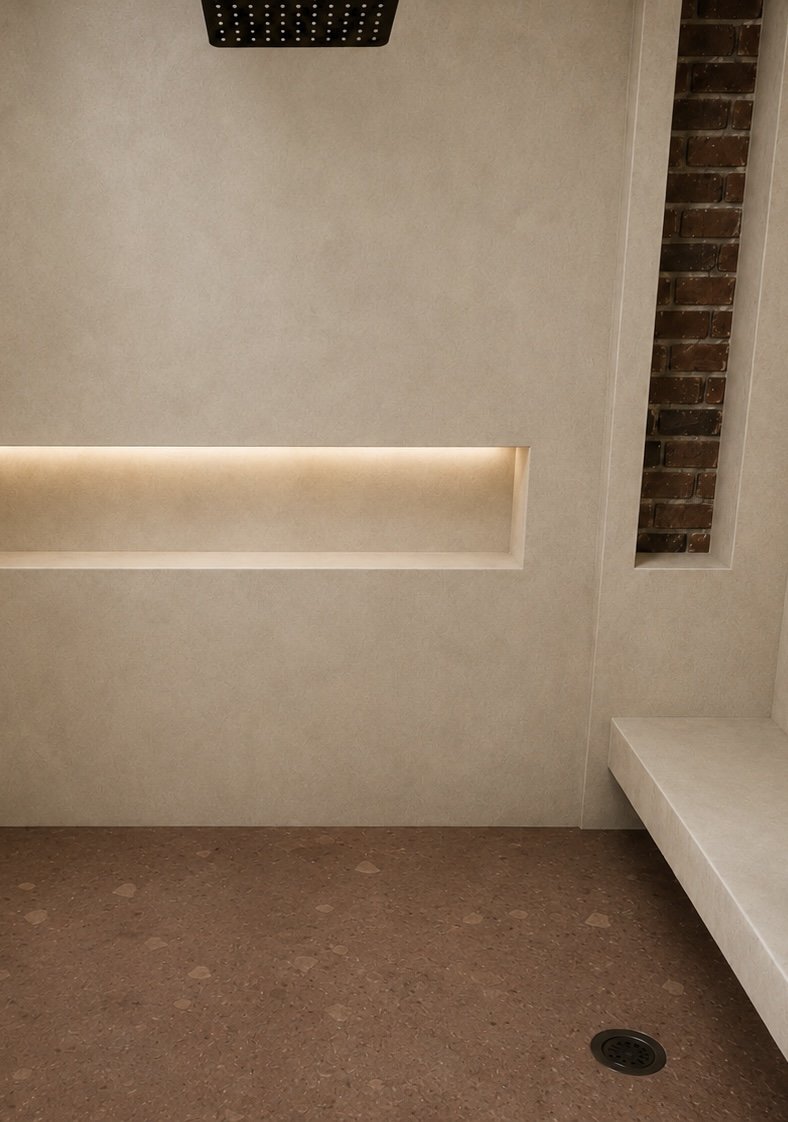
- Walls, floor, and shower in one continuous shell
- Fixture upgrades + integrated lighting
- Selective demolition + waterproofing rebuild
- New plumbing runs & niche builds
- Custom color, texture, and hand-finish
Included, at no charge
Every qualifying Signature Grout-Free Bathroom Transformation includes up to 30 square feet of radiant heated flooring at no additional charge.
Final pricing depends on substrate condition, square footage, waterproofing requirements, plumbing, fixtures, electrical work, access, and finish complexity.
Serving homeowners across the New Orleans area with grout-free bathrooms, microcement, and specialty finishes.